Financial institutions are spending more than ever to fight financial crime, yet the cost of getting it wrong keeps rising. Studies estimate that financial crime compliance (FCC) programs cost $61 billion a year in the US and Canada,1 $85 billion in EMEA,2 and $45 billion across APAC,3 driven by tougher regulations and the growing complexity of compliance at scale.
Despite this, enforcement actions continue to increase, often pointing to the same problems: weak governance, systems that don’t scale, and missing controls. In the past two years, some of the world’s most recognized neobanks, crypto platforms, and payment startups have faced multimillion-dollar fines and lasting reputational damage.
If you’re building a fintech, the fastest way to attract regulatory trouble is assuming you can “add compliance later.” Time and again, rapid growth outpaces FCC design, leaving gaps in sanctions screening, know your customer (KYC), monitoring, and board oversight.
Below are five of the most common, and costly, FCC mistakes seen in recent cases, along with practical steps to help fintech startups scale responsibly and avoid them.

1. Treating Sanctions Screening as a Checkbox
Why it happens: Early-stage fintechs often implement minimal screening solutions designed for local use. These systems may not capture name variations, handle multilingual data, or update lists dynamically. As cross-border transactions grow, these gaps become significant.
How to fix it: Understand where your risk truly lies: in which markets, currencies, and customer types you handle. Use screening tools that automatically update lists, account for spelling variations, and re-check existing clients regularly. Most importantly, test them often.
2. Letting Alert Backlogs and Reporting Delays Build Up
Why it happens: Transaction monitoring systems often lag behind business growth. The rules and tools that worked during the pilot phase quickly become insufficient as volumes and transaction types multiply. Without automation and proper resourcing, alerts accumulate, reports are delayed, and critical activity can be missed.
How to fix it: Plan for growth before it happens. Build monitoring capacity around projected transaction volumes, not just current levels. Use automation to handle simple, low-risk alerts, and design clear processes for investigating the complex ones. Dashboards tracking turnaround times and alert volumes help teams stay proactive.
3. Onboarding High-Risk Customers Without Proper Checks
Why it happens: Fintech startups often prioritize frictionless onboarding to drive growth. Temporary workarounds—such as manual exceptions or limited ID verification—can become systemic weaknesses once customer volumes increase.
How to fix it: Define what “high risk” really means for your business and enforce those rules through your systems. High-risk profiles should automatically trigger enhanced checks and require dual approval before activation. Training staff to spot suspicious patterns, like duplicate identities, helps catch issues early.
4. Expanding into Crypto with Outdated Controls
Why it happens: Many fintechs entering the crypto or digital asset space rely on traditional fiat-era controls that don’t address new risks such as wallet tracing, asset provenance, or exchange partner due diligence.
How to fix it: Before launching any crypto product, assess where risks come from, asset types, markets, or partners. Integrate blockchain analytics to trace suspicious wallets and detect connections to sanctioned entities. Train compliance teams to investigate crypto activity confidently and record clear rationales for their decisions.
5. Having Weak Governance and Documentation (The Invisible Failure)
Why it happens: Fast-growing fintechs often focus on expansion, product development, and fundraising—leaving compliance documentation and governance as afterthoughts. As a result, key decisions, investigations, and risk assessments go unrecorded, creating major challenges during audits or regulatory reviews.
How to fix it: Build compliance governance into your culture early. Hold regular oversight meetings, track key metrics, and keep your policies current. Use systems that automatically log who made each compliance decision and why. Running internal “regulatory fire drills” helps teams respond confidently if an audit comes up.
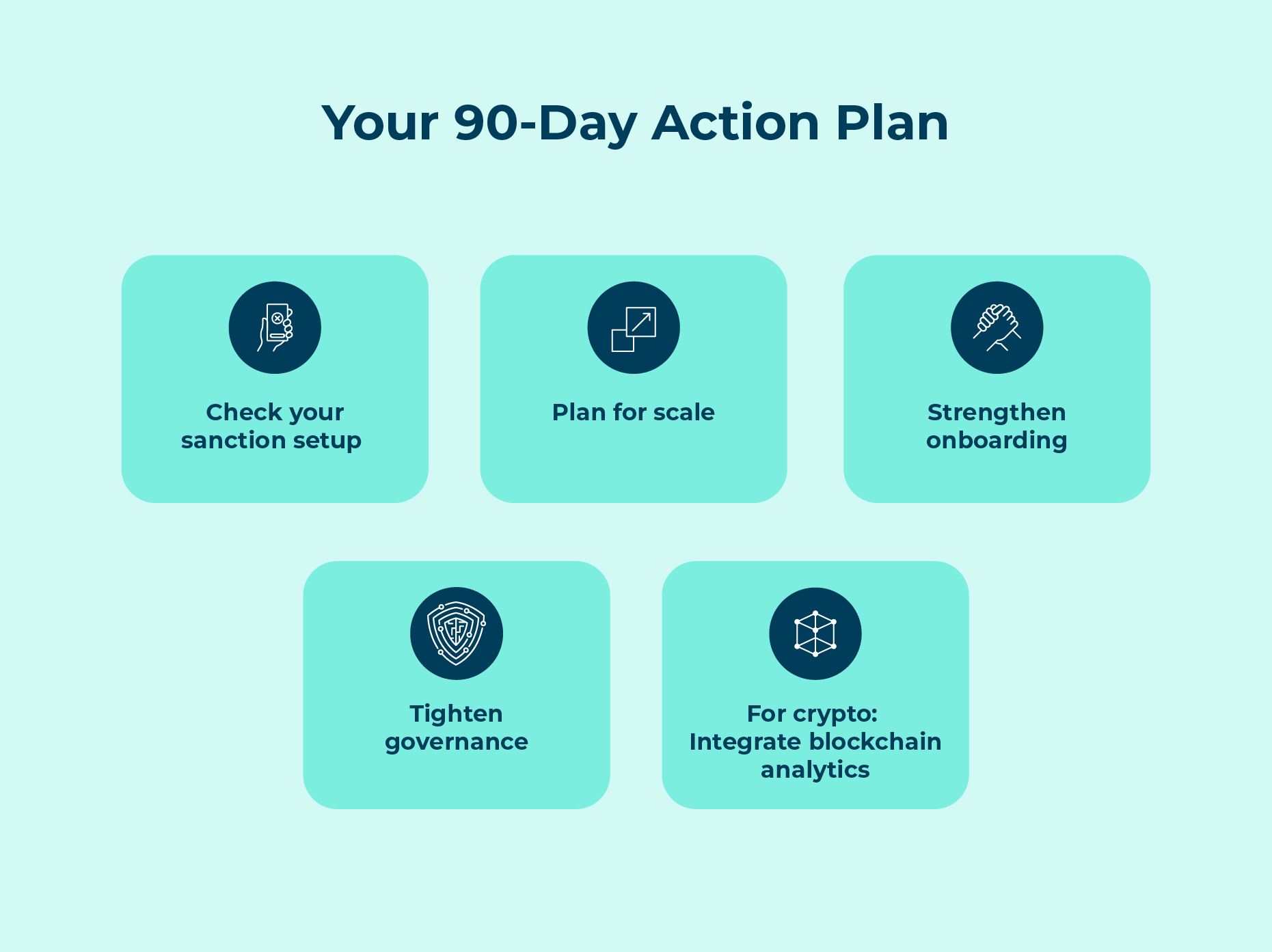
Your 90-Day Action Plan
Improving FCC doesn’t take years, but it does take focus. Here’s where growing fintech startups should start in the next three months:
- Check your sanctions setup. Make sure your screening covers all relevant names, includes variations, and re-checks existing customers.
- Plan for scale. Compare your current alert volumes to projected growth, and ensure you can manage spikes without delays.
- Strengthen onboarding. Embed enhanced checks for high-risk customers into your systems so they can’t be bypassed.
- Tighten governance. Build simple dashboards showing key metrics, customer volumes, alerts, reports filed, and quality checks, for leadership oversight.
- If you work with crypto: Integrate blockchain analytics into your monitoring tools and document how you assess risks tied to digital asset partners.
Building Compliance That Scales with You
The recent wave of fines sends a clear message: compliance can’t be an afterthought. Every one of these common mistakes stems from building controls too late, but each can be prevented with the right foundations.
Embedding compliance early doesn’t just reduce regulatory risk; it also builds customer trust, accelerates onboarding, and reassures investors. Strong FCC frameworks are no longer just a defensive shield—they’re a competitive advantage.
At Concentrix, we know the startup journey is fast-paced and resource-constrained. Through The Nest, our dedicated program for fintech startups, we help founders and compliance leaders:
- Design FCC frameworks that evolve with their growth.
- Integrate technology, automation, and analytics from day one.
- Build operations that scale smoothly as volumes rise.
In fintech, the strongest currency is confidence. Whether you’re a challenger bank, a crypto platform, or a payments provider, find out how The Nest helps you grow fast, stay compliant, and earn lasting trust.
1 “Study Reveals Annual Cost of Financial Crime Compliance Totals $61 Billion in the United States and Canada,” LexisNexis® Risk Solutions, February 21, 2024.
2 “Study Reveals Annual Cost of Financial Crime Compliance Totals $85 Billion in EMEA,” LexisNexis® Risk Solutions, March 6, 2024.
3 “Study Reveals Annual Cost of Financial Crime Compliance Totals $45 Billion in Asia Pacific,” LexisNexis® Risk Solutions, March 6, 2024.