From Reactive Repairs to Proactive Prevention
Vehicle manufacturer buyback is a major source of concern for both customers and original equipment manufacturers (OEMs). It often comes with substantial frustrations for customers and various risks for OEMs, including financial, legal, and reputational issues. By adopting a proactive approach focused on using data, technology, and customer engagement, OEMs can substantially reduce these risks and enhance the experience for both customers and dealers.
The Customer Journey That’s Driving Frustration
The journey from a dissatisfied customer to a manufacturer buyback can be plagued with issues:
- Multiple trips and added costs: Customers often return to dealerships several times for repairs and troubleshooting, leading to lost time, loss of reliable transportation, and increased out-of-pocket expenses.
- Lost documentation and administrative delays: Misplaced paperwork and slow internal processes create unnecessary complications during the buyback process.
- Communication gaps: Poor updates lead to surprises and confusion.
- Lengthy processes: Delays in transfers and approvals only make matters worse, extending the time before resolution.
- Emotional toll: These experiences can erode trust in the brand.
Why OEMs Struggle to Keep Manufacturer Buyback Under Control
OEMs face significant hurdles in managing buybacks due to intricate internal coordination challenges, monitoring inefficiencies, reactive processes, and financial exposure:
- Complex internal coordination: Managing multiple parties, documents, and dealership communications is cumbersome.
- Tracking inefficiencies: Monitoring customer status updates, transportation approvals, and missing documentation adds delays.
- Reactive processes: OEMs often become aware of widespread issues only after numerous lemon law claims have been filed.
- Financial and legal exposure: Delays and poor processes can increase costs and reputational risk, making buyback a major concern.
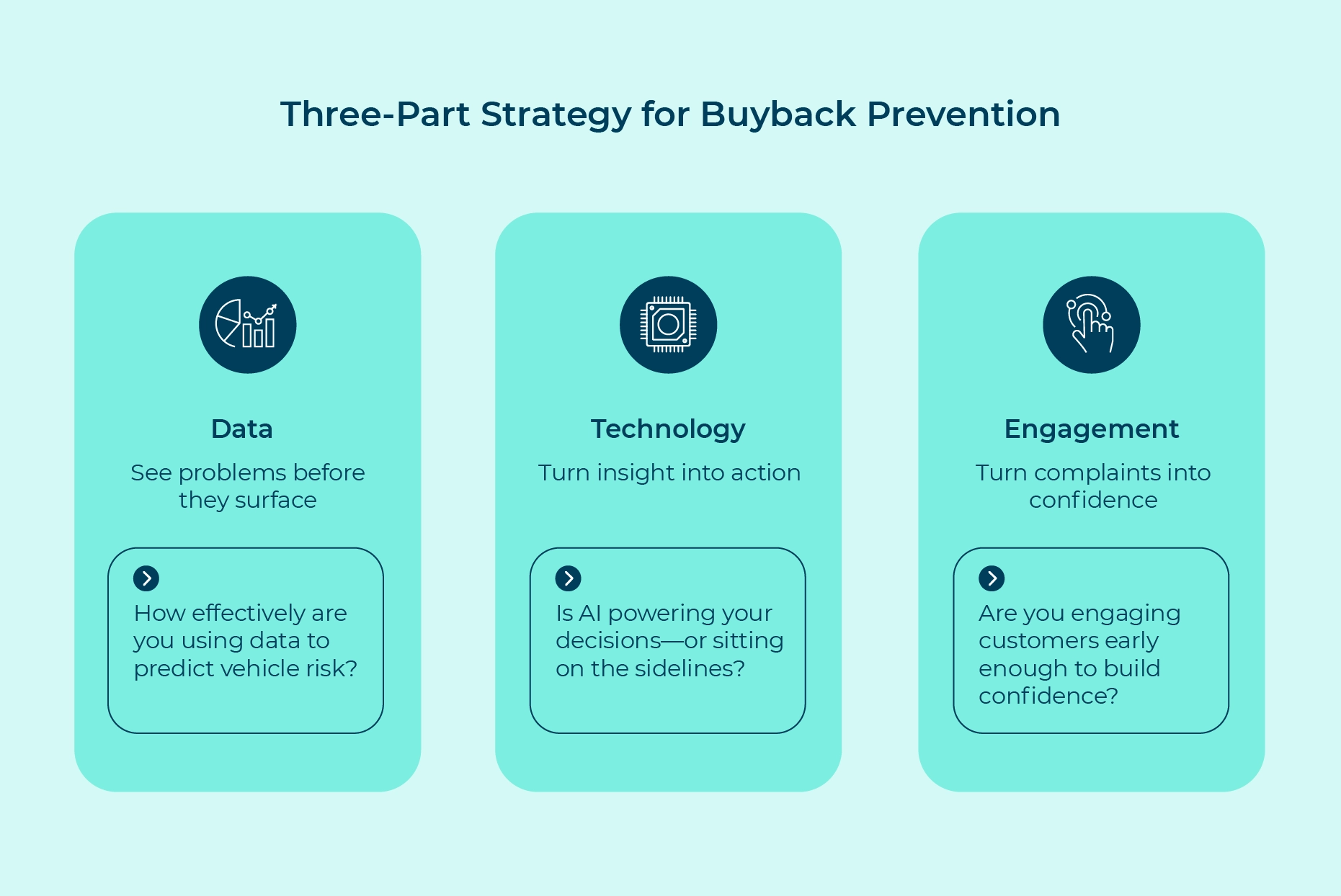
The Three-Part Strategy for Buyback Prevention: Data, Technology, and Customer Engagement
Preventing buyback requires anticipating issues, connecting systems, and engaging customers before problems escalate.
1. Data: Seeing Problems Before They Surface
Data allows organizations to move away from traditional, reactive processes that depend on multiple repair attempts and delayed responses after issues escalate.
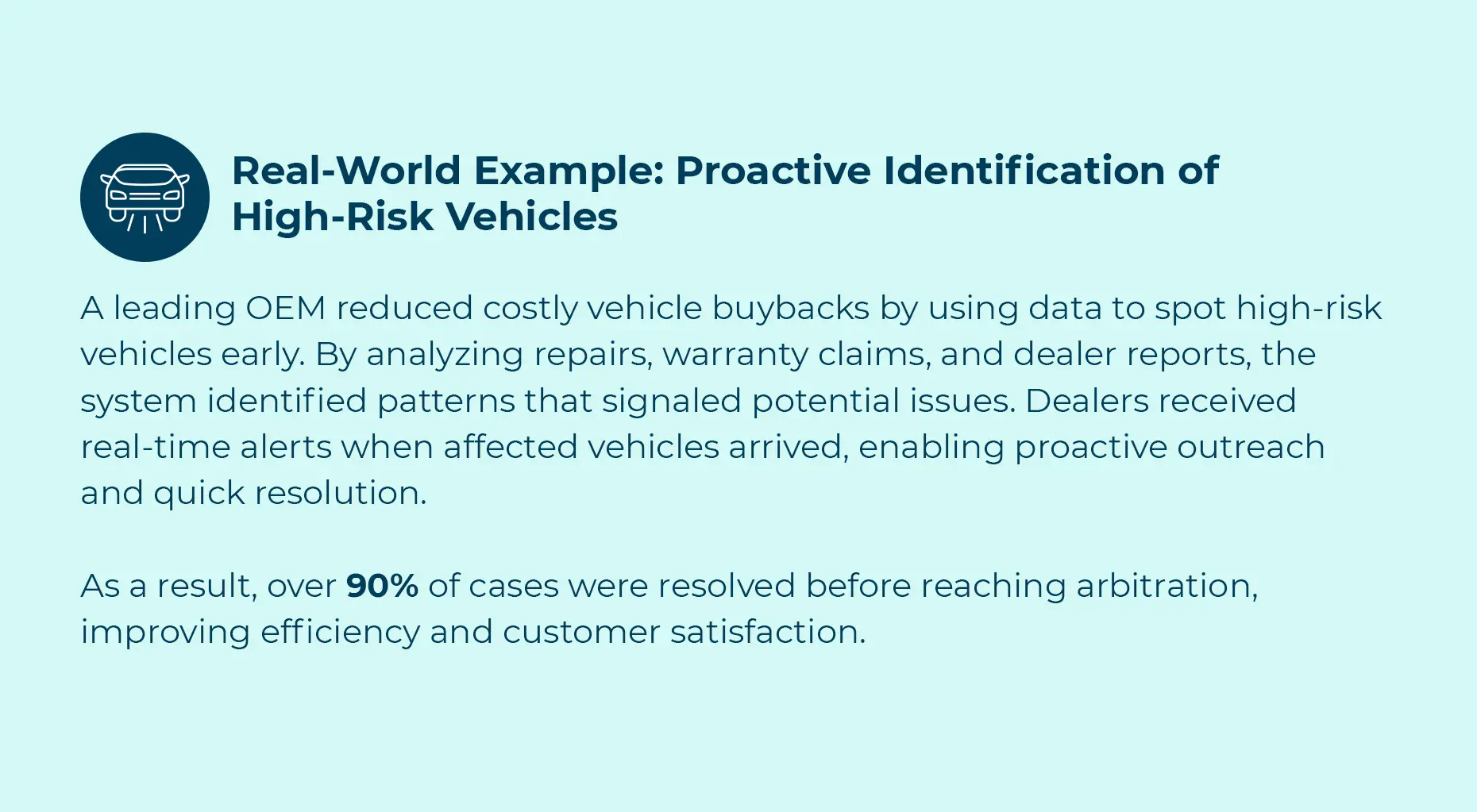
By leveraging repair, warranty, and operational data, companies can proactively identify high-risk vehicles early in their lifecycle. This data-driven approach helps detect patterns and trends that may signal potential lemon law claims, enabling early outreach to customers before minor concerns become major problems.
Early detection and intervention reduce the financial impact of recurring buybacks, saving substantial costs that can be reinvested to strengthen preventive systems and quality assurance efforts. This approach also leads to improved vehicle quality, as data insights help teams address underlying issues before they affect broader product performance.
Additionally, proactive engagement minimizes the likelihood of formal lemon law claims and enhances overall customer satisfaction. When customers see that issues are resolved before they become serious, it builds trust, reinforces brand loyalty, and supports long-term business success.
Point for reflection: How effectively are you using data to predict vehicle risk?
2. Technology: Turning Insight into Action
Integrated technology platforms improve collaboration between OEMs, dealers, and customers:
- Centralized portals to share updates and approvals.
- Real-time communication between departments.
- Digital workflows to track documentation, status, and timeline.
In addition, emerging AI-driven tools like Salesforce Einstein can take this a step further by turning insights into concrete actions. CRM data can range from service history, warranty data, and customer feedback, all of which can be used to recommend personalized steps for staff to take with a vehicle owner. That could include scheduling a follow-up inspection, offering a service incentive, or simply raising attention to small concerns earlier in the ownership cycle.
By leveraging AI to guide decision-making and prioritize proactive outreach, OEMs can ensure that minor issues are addressed before they escalate.
Point for reflection: Is AI powering your decisions—or sitting on the sidelines?
3. Customer Engagement: Turning Complaints into Confidence
By addressing concerns proactively, customer experience can transform:
- Early outreach to owners of at-risk vehicles.
- Regular status updates, clear expectations, and simple next steps.
- Offering flexible solutions—repairs, exchanges, or incentives.
When customers feel heard, they’re less likely to escalate to legal action.
To strengthen this engagement, a connected environment between the customer, OEM, and dealer is essential. In a connected ecosystem, the customer sits at the center—linked to every touchpoint across telematics, CRM, and service interactions. Without access to holistic consumer data, it’s impossible to deliver personalized, seamless experiences. A connected care environment provides this visibility, enabling faster responses, proactive support, and consistent communication that builds trust and confidence throughout the ownership journey.
Point for reflection: Are you engaging customers early enough to build confidence?
How Dealers Can Become Your Secret Weapon Against Buybacks
Dealers can be a key part of preventing manufacturer buyback when they have the right information and support. Sharing clear service bulletins that describe specific symptoms, diagnostic steps, and proven repair methods helps technicians address issues quickly and correctly.
Training materials based on common problems identified through data also prepare dealers to handle repairs more effectively. With this shared knowledge, dealerships become an active part of identifying and fixing issues early instead of reacting after problems grow.
Good communication with dealers also saves time and ensures repairs are done right the first time. When technicians know what to look for and how to fix it, they avoid trial-and-error repairs, keep service quality consistent, and work more efficiently. This reduces customer frustration and builds trust by showing that the company takes problems seriously and solves them quickly. In the end, informed and well-prepared dealers help prevent buybacks and keep customers satisfied.
Yet for OEMs already doing all of this, it’s worth asking: is your collaboration with dealerships truly effective, and is it working as intended to reduce buyback?
Turning Risk into Loyalty: Why Proactive OEMs Win
Each time they step in early, OEMs show customers that the company is committed to solving issues before they grow, which builds trust and confidence. Acting early also makes repairs more efficient and helps avoid unnecessary legal and financial costs.
When OEMs use proactive systems, manufacturer buyback stops being just an expense and become an opportunity to strengthen the brand. Every early action to fix a problem reinforces reliability and care, showing customers that their experience matters. This shift reduces risk and also deepens loyalty, turning potential losses into long-term value.
Final Thoughts: Building a Proactive Future
By anticipating problems before they escalate, OEMs can reduce manufacturer buyback, save costs, and enhance the customer experience—turning a traditionally negative process into a competitive advantage.
- Use data and technology to prevent buybacks and improve overall quality.
- Implement proactive identification systems for high-risk vehicles.
- Understand and reduce customer frustration through streamlined communication and processes.
- Leverage dealer networks through knowledge sharing and early communication.